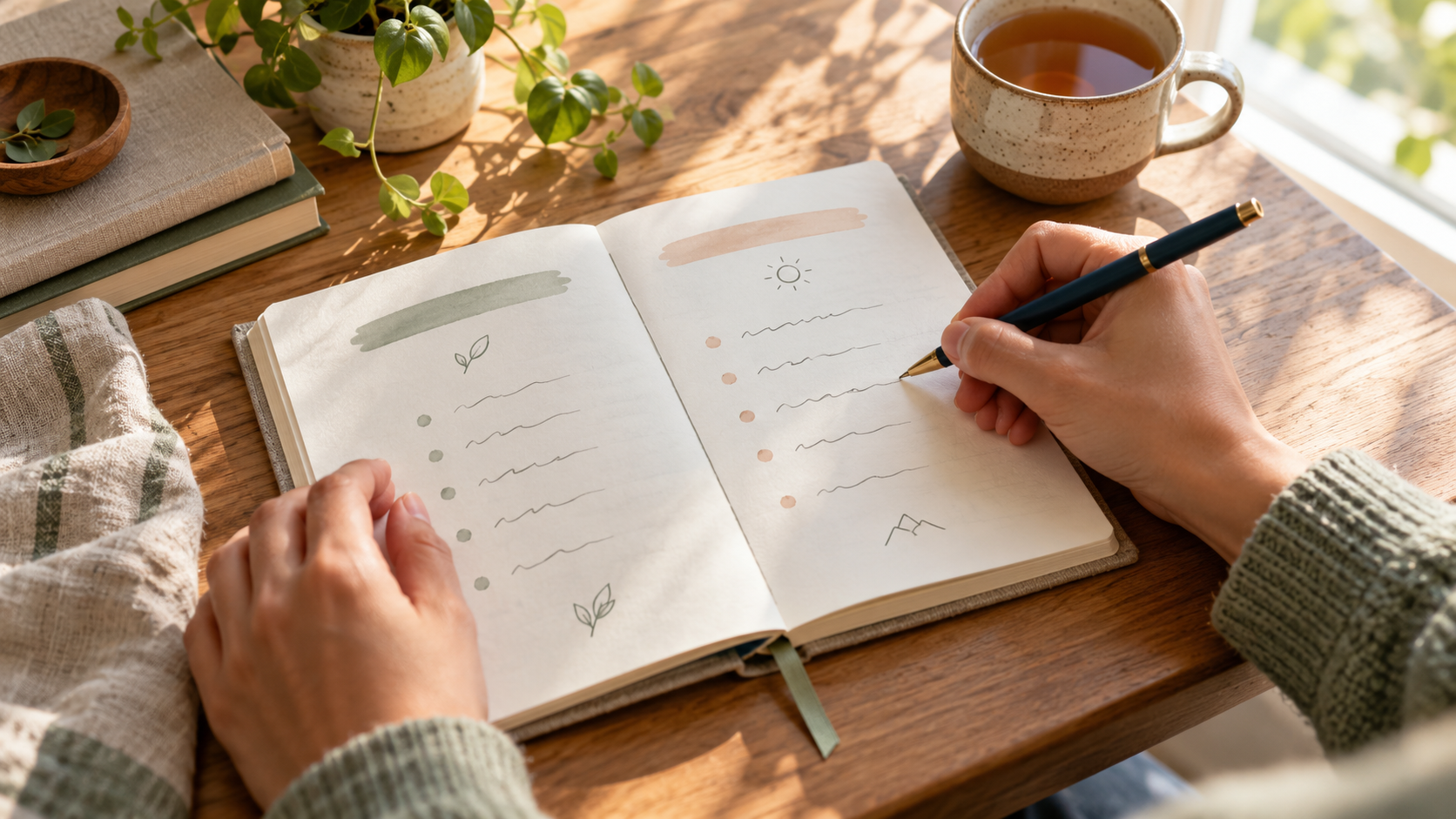



When progress feels slow, the answer is rarely to practise for longer without a plan. A better move is to turn one practice session into a small loop: choose one skill, try it, notice what happened, adjust one thing, then try again. That is how practice becomes information rather than repetition.
This approach works for many everyday goals: clearer presentations, stronger writing, a musical passage, a new workout movement, or a language conversation. The loop does not promise instant mastery. It gives you a reliable way to make your next attempt more useful than your last.
Start with a narrow target
Vague goals make feedback vague. Replace “get better at public speaking” with a target you can observe, such as “explain the opening of my presentation in 60 seconds without reading my notes.” Replace “improve my writing” with “write one paragraph with a clear claim and one supporting example.”
Keep the target small enough to repeat in one session. Research on deliberate practice describes improvement as focused work on specific aspects of performance, paired with feedback and opportunities to correct errors. It is more demanding than simply clocking hours.
Run one honest attempt
Perform the small task once under conditions that resemble the real thing. Record a voice memo, use a timer, solve a sample problem without looking at the answer, or ask a friend to listen. The goal is not to prove you are good at it; it is to create something you can inspect.
Make the attempt short. A ten-minute writing exercise, two minutes of a speech, or one set of a movement is enough to reveal a pattern. Short attempts also lower the cost of starting again.
Get feedback you can act on
Feedback is most helpful when it answers three questions: What was the goal? What happened? What should I change next? You can get it from a coach, teacher, colleague, recording, answer key, or a simple checklist you created in advance.
Ask for one priority, not a complete verdict. For example: “Which sentence was hardest to follow?” “Where did I lose the beat?” or “What was one step I skipped?” A focused question makes it easier for another person to help and keeps you from trying to repair everything at once.
Change one variable, then repeat
Choose the smallest adjustment that addresses the feedback. Slow the first sentence. Pause before your key point. Cover the answer before recalling it. Use a simpler transition. Then run the same small task again.
Changing one variable is important because it lets you learn what caused the difference. If you alter your script, pace, examples, and setting all at once, you may improve without knowing why. Treat each repeat as a tiny experiment.
Keep a two-line practice log
After each session, write two lines: “What I noticed” and “What I will test next.” This is enough to prevent useful feedback from disappearing between sessions. It also creates evidence of progress when your confidence lags behind your skill.
For learning material, combine the loop with retrieval: close the book or notes, try to recall, check what you missed, and return later. The Institute of Education Sciences practice guide recommends spacing learning over time and using quizzes or other retrieval practice. A review in Psychological Science in the Public Interest likewise identifies practice testing and distributed practice as especially useful learning techniques.
Use a simple 20-minute session
- 2 minutes: Define one observable target.
- 6 minutes: Do one focused attempt.
- 4 minutes: Review a recording, checklist, model answer, or trusted person’s feedback.
- 6 minutes: Repeat with one deliberate change.
- 2 minutes: Write your two-line log and decide when you will practise again.
Consistency matters, but so does recovery. Stop before fatigue turns your attention into autopilot. A smaller, repeatable session with a clear feedback loop will usually serve you better than an occasional marathon that produces no next step.
Make feedback safe enough to use
Feedback can sting, especially when you care about the skill. Try describing the result rather than your identity: “My explanation jumped between ideas” is something you can revise; “I am bad at explaining” is a label that shuts the loop down. The American Psychological Association’s guidance on building resilience notes the value of focusing on manageable actions and learning from experience rather than treating setbacks as permanent.
Use the practice-feedback loop for the next week on one skill you genuinely want to improve. Keep the target narrow, seek one useful signal, and make one change at a time. That is enough structure to turn effort into direction.
Frequently asked questions
1. How often should I use a practice-feedback loop?
Use it whenever you are building a skill. Two or three short sessions each week are a practical starting point; schedule the next session before you finish the current one.
2. What if I do not have a coach or teacher?
Create feedback from a recording, checklist, model answer, rubric, or comparison with a trustworthy source. Ask a peer one specific question rather than requesting general criticism.
3. Can this work for physical skills?
Yes. Film a short repetition, compare it with safe instruction from a qualified source, and change one cue at a time. For pain, injury, or medical concerns, consult an appropriately qualified health professional.
4. How do I know what feedback to trust?
Prefer feedback tied to the goal and from a credible source. Look for concrete observations you can test, not broad judgments about your talent or potential.
5. What should I do when the second attempt is worse?
Record what changed and return to the simpler version. A worse attempt is still information; it may show that the adjustment was too large, the target was unclear, or fatigue was affecting performance.
6. Does repeating the same task make practice boring?
It can if the task is too easy or feedback is missing. Keep the repeat short, give it one clear purpose, and gradually raise the difficulty once you can perform the current version reliably.